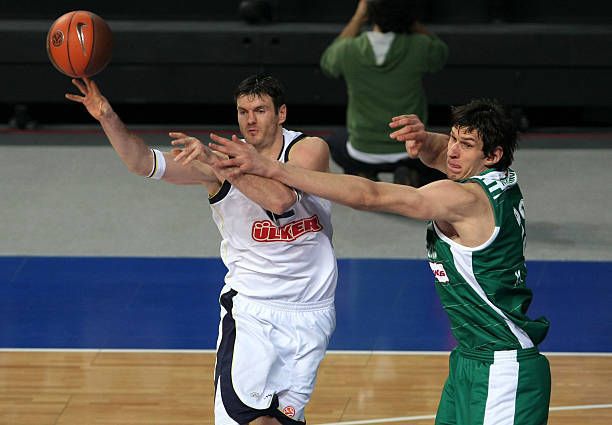
In the legendary 2010/2011 season, when Fenerbahçe made basketball history by achieving the “Double” (Double Championship), there was a name who became a giant on the court with both his intelligence and talent: Darjuš Lavrinovič. As one of the most important representatives of the “modern big man” definition in Europe, the Lithuanian legend became a fan favorite during that iconic season wearing the Yellow-and-Navy jersey, playing a key role in the trophies won and the tough derbies played.
As the Salon Tribünü team, we sat down today with Darjuš Lavrinovič, one of the symbolic figures of Lithuanian basketball. He shared everything with our team members, Erdi Tiran and Baran Arslan, with total sincerity—from his famous on-court memories with Mirsad Türkcan to the “general-like” leadership of our current head coach and his long-time friend, Šarūnas Jasikevičius, and the overall vision of Fenerbahçe.
We leave you with this exclusive, detailed interview where Lavrinovič explains why Fenerbahçe will always hold a special place in his heart.
Dear Darjuš, first of all, thank you so much for accepting this interview request from the Salon Tribünü team. It is a great honor to talk with you. To start things off, could you share the story of how your basketball journey began? What was the spark that led you to the court?
I started playing basketball at the age of 13 with my brother. In the beginning, my spark was for sports in general, not specifically basketball. My brother and I, until the age of 13, participated in various sports like karate, swimming, and athletics. However, because we were growing so fast—at the age of 13 we were already 192 cm—we decided to try basketball. When we were 16, our basketball academy’s coach signed on to be the head coach for Alytus in the highest Lithuanian basketball league. He took us with him, and that is where our professional careers began.
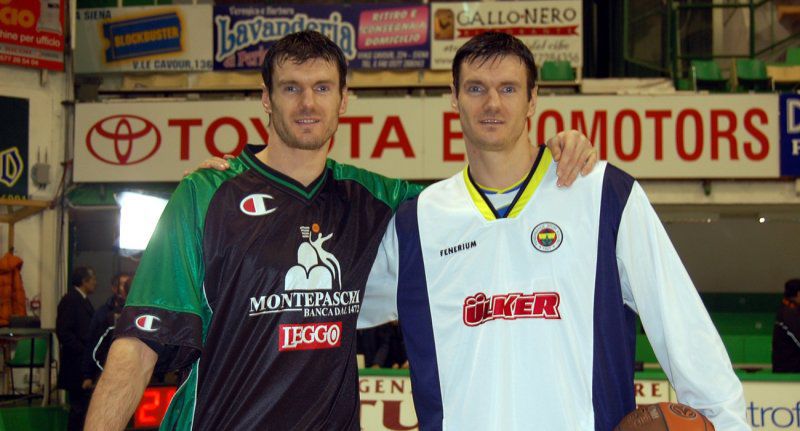
When you were growing up, who were the idols you looked up to? Also, in your early years, was your playing style always focused on being a versatile big man, or did your role on the court evolve over time?
When we were growing up, we looked up to players like Michael Jordan, Shaquille O’Neal, and Karl Malone. Of course, we also admired Lithuanian basketball legends like Arvydas Sabonis, Gintaras Einikis, Valdemaras Chomičius, Gintaras Krapikas, Rimas Kurtinaitis, and so on. My brother and I always enjoyed scoring; it didn’t matter if it was from under the basket, the mid-range, or a three-pointer. When we were young, we received a lot of criticism from coaches who felt we didn’t play under the basket enough. But we always played how our hearts told us to play. We were never afraid of being criticized, and because of that, I think we became versatile big man.
You started your professional career with Alita Alytus in 1996 and stayed there until 2003. Spending seven years at your first club is quite a long time in professional sports. How did those years shape you as a player, and what are your fondest memories from that period of your life?
I think of Alytus as a second home to me after Vilnius. I am very thankful to the coaches there—Vytautas Poteliūnas, Eduardas Kairys, and Kriučkauskas—who taught me the fundamentals of basketball. I am also very grateful for my teammates, especially Nerijus Varnelis, who took us under his wing and took care of us. I have a very good memory of when we won the first bronze medal in LKL history for the Alytus club.
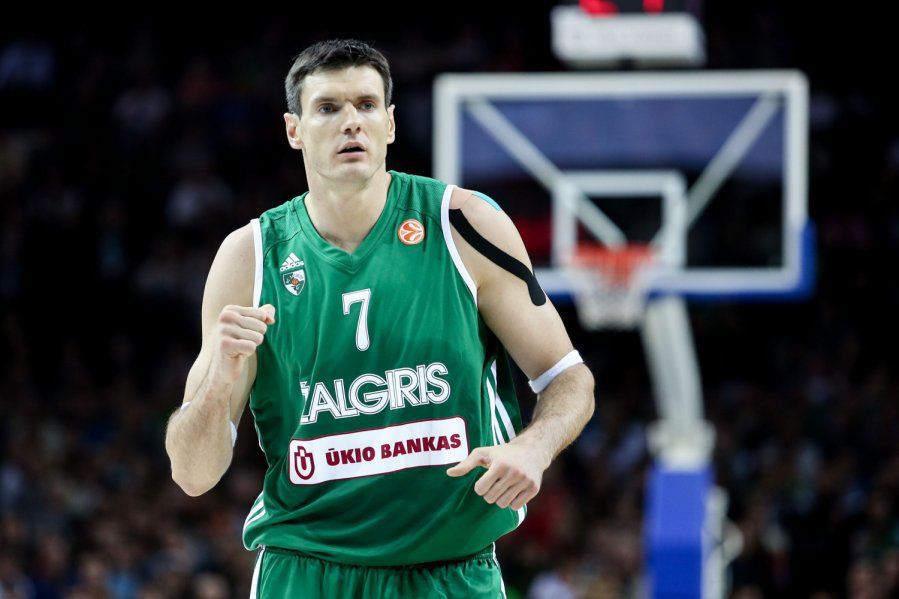
Between 2003 and 2006, you played for Žalgiris Kaunas, where you enjoyed incredible success—winning the league title every year and the Baltic League in 2005. What was the secret behind that team’s dominance? Also, as a Lithuanian player, what did it mean to you to reach those heights with the most iconic club in your country?
Yes, this Žalgiris team helped me improve to the next level. We had an excellent team with players like Arvydas Sabonis, Paulius Jankūnas, and Tanoka Beard. Thanks to the great organization and professional coaches like Antanas Sireika and Gintaras Krapikas, who knew how to use every player’s strengths, we were able to dominate. Every Lithuanian kid’s dream is to be able to play for Žalgiris, so it was a great honor for me to play there.
In 2006, while wearing the Žalgiris jersey, you were selected for the All-EuroLeague Second Team. At that time, how did it feel to be officially recognized as one of the best players in Europe’s most prestigious league? Looking back, what did that milestone mean for your confidence and the rest of your career?
At the beginning, I didn’t think too much about the All-EuroLeague Second Team award because I felt this recognition wasn’t just for me, but for my whole team. Thanks to my teammates and my coaches, I was able to play that well. But looking back now, I am very thankful and proud of that award.
Following your successful years at Žalgiris, you moved to Russia to play for UNICS Kazan and Dynamo Moscow. At that time, the Russian league was becoming one of the toughest in Europe. How would you describe your ‘Russian adventure’ both on and off the court? What were the biggest differences you experienced compared to playing in Lithuania?
I consider my journey to Russia a very good experience; it toughened me up both as a person and as a basketball player. In Lithuania, when you are a local player, a lot of things are forgiven within the clubs. However, as a foreigner in Russia, teams require a lot from you, and you have to fight for every single minute of playing time.
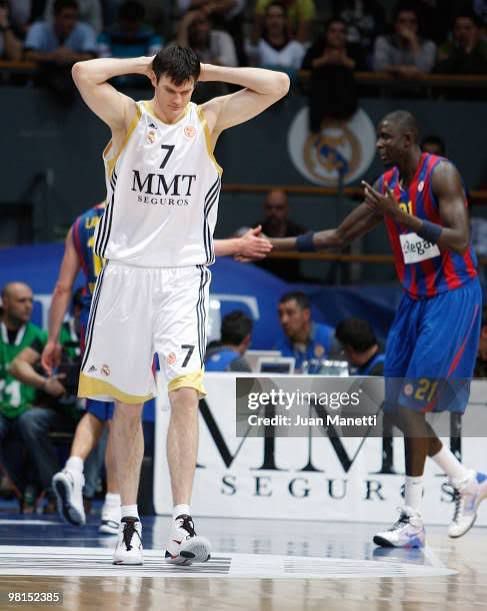
In the 2009/2010 season, you played for one of the biggest clubs in the world, Real Madrid. Even though it was for one season, wearing that iconic white jersey is a dream for many. When you look back today, what are the most special memories you carry from your time in Madrid? How was the atmosphere at the club?
First of all, it was a big honor to play with so many stars in one team and be a part of such an iconic organization. When I received the offer from Real Madrid, I was very happy because not every basketball player has the opportunity to play for this club. It was the first time I encountered such a high-level organization. Although the season didn’t go as planned in terms of the EuroLeague, the atmosphere was perfect.
In the 2010/2011 season, you made a move that thrilled all Fenerbahçe fans by joining the club. Could you tell us how that transfer process happened? What was the main reason that convinced you to come to Istanbul and join the Fenerbahçe project at that time?
We started talking with Fenerbahçe before the end of my season with Real Madrid. I saw their high ambitions and the massive project the club had in mind. I had heard many very good things about the Fenerbahçe organization. The coach at the time, Neven Spahija, was somewhat known to me. I knew that I would have an important role on the team, and I believe I didn’t make a mistake in making this decision. The organization was at the highest level, my teammates were perfect, and the living conditions for my family were among the best I had in my career.
During your season with Fenerbahçe, you achieved a magnificent ‘Double’ by winning both the Turkish League and the Turkish Cup. What are your memories of that dominant run? Specifically, the final series against Galatasaray was incredibly intense—how did it feel to play in such a high-stakes derby atmosphere, and what do you think was the key to winning that title?
I believe Coach Spahija recruited a great collective of teammates—not only good players but also great individuals and people. Regarding winning the Turkish finals, I think the main reason was the perfect playing shape of Šarūnas Jasikevičius. He led the team perfectly and played very effectively.
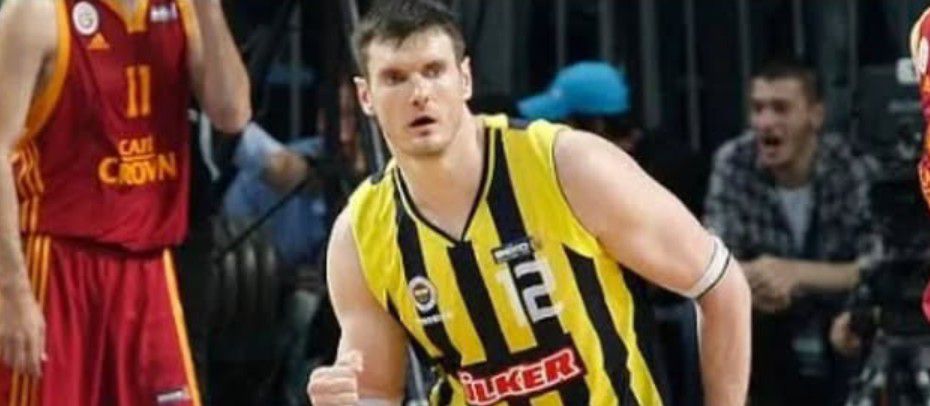
In the EuroLeague that season, the team had a brilliant start in the Top 16, winning the first three games. However, things took a difficult turn with three consecutive losses, leading to a heartbreaking exit. Looking back, what do you think went wrong during that stretch? Was it a loss of rhythm, injuries, or something else that prevented that talented squad from reaching the Final Four?
Now, it’s hard to say exactly why we lost. I perfectly remember our potential; we definitely didn’t play as well as we could have. At the moment we suffered those losses, we were unbalanced. The EuroLeague format was very different back then compared to now, and losing just one or two games could stop your chance of advancing to the next stage and the Final Four.
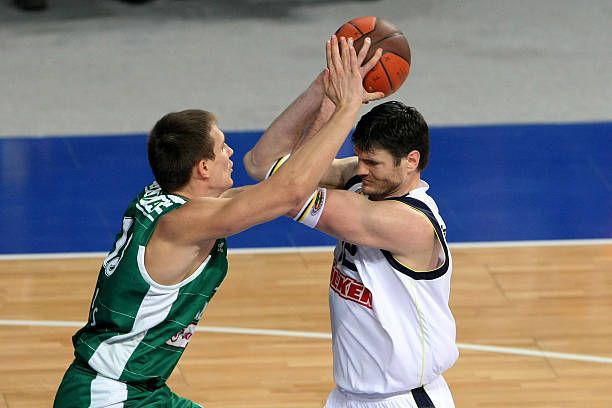
Do you have a particularly unforgettable memory from your time at Fenerbahçe, either on the court or off it? Whether it was a funny moment in the locker room, a special connection with the fans, or a life experience in Istanbul—what is the first story that comes to your mind when you think of that year?
The first moment that comes to mind was our first away game versus Beşiktaş. During the game at their arena, the ball went out of bounds where the Beşiktaş fans were closest. I wanted to go and pick up the ball, but Mirsad Türkcan took me by the hand, stopped me, and told me, “Don’t risk it and don’t go there.” At first, I was surprised as to why, and then I saw the referee go to take the ball, and the Beşiktaş fans spit on him and poured beer on him. So, I am very thankful that Mirsad saved me at that moment.😄
You were one of the pioneers of the ‘modern big man’ who could shoot and pass like a guard. If you were a coach today and had a young Darjuš Lavrinovič on your team, how would you manage his game? What specific parts of your skillset would you tell your younger self to focus on even more in today’s era of basketball?
As a coach, I think I would do the same things Europe’s greatest coaches did when I played for them. I would encourage him to play more defense! Regarding the offense, I think everything worked out well for me.
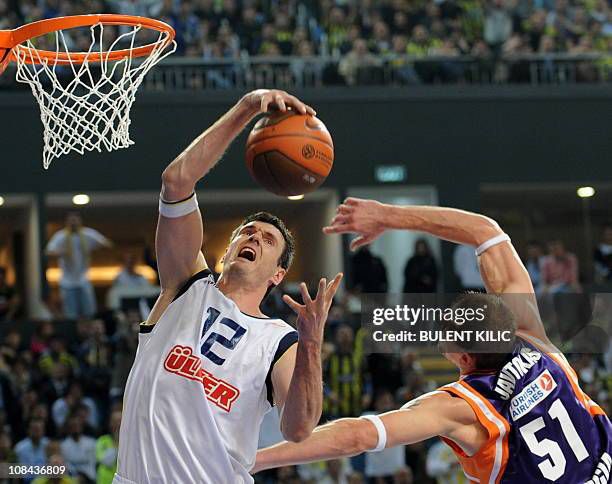
Matches against rivals like Galatasaray, Beşiktaş, and Efes Pilsen have always carried a special weight for the Fenerbahçe community. As a professional, did you prepare for these high-tension derbies differently than other games? What was the energy like in the locker room during those weeks?
I prepared the same for all matches; it didn’t matter which team I played against. I was always trying to be 100% ready for every game. For me, it was very important that when I left the court and finished a game, I knew I had left 100% of myself out there. There wasn’t a specific different preparation, but I always tried to analyze the opponent very well.
During your time at Fenerbahçe, you shared the court with many incredible talents and legendary names. Looking back, which teammate did you enjoy playing with the most? Was there someone you felt you had a ‘telepathic’ connection with on the court?
Probably Šarūnas Jasikevičius, because we knew each other very well from playing together for many years on the Lithuanian Men’s National Team.
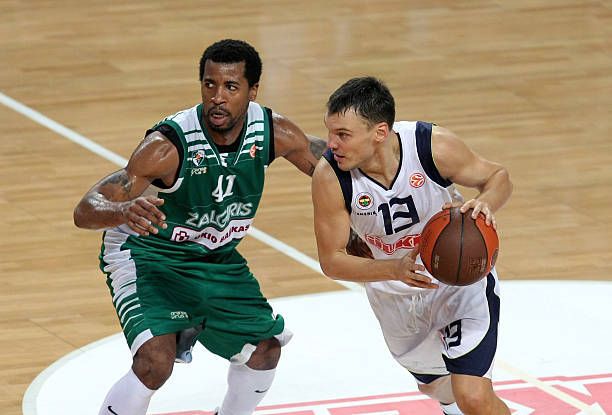
The 2010/2011 season was also the time when Fenerbahçe fans turned Sinan Erdem Sports Hall into a fortress. How would you describe the atmosphere they created back then? As a player on the court, how much did that incredible noise and passion motivate you, and how did it affect your opponents?
I think any basketball player seeing such an incredible fan base support would be much more motivated to give their absolute maximum on the court. Fenerbahçe fans were incredible and amazing.
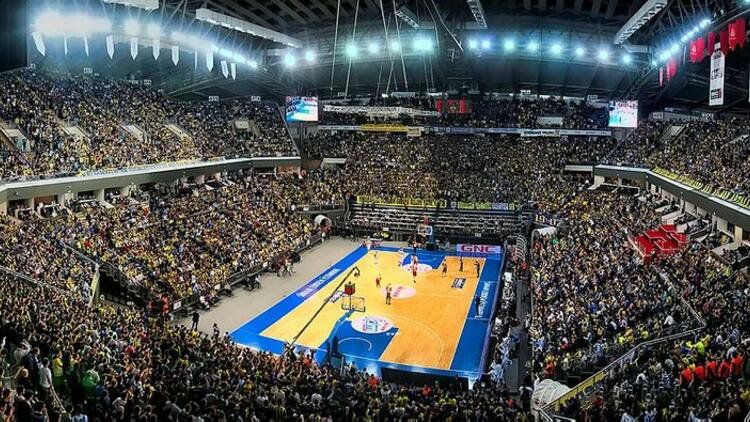
Fenerbahçe has made a tremendous leap over the last 20 years, evolving from a powerhouse in Turkey to a European giant and becoming EuroLeague champions in 2017 and 2025. As someone who played a key role in the earlier stages of this journey, how do you evaluate this transformation? What do you think has been the most important factor in Fenerbahçe’s sustained success at the highest level of European basketball?
First of all, I want to applaud the organization. They understand what they are doing; they are able to secure the best coaches in Europe and great players, and they create a perfect infrastructure for the players and coaches to work in. Fenerbahçe has everything: a great arena, perfect fans, and most importantly, the motivation and ambition to be the best.
After your time in Istanbul, your career took you to several prestigious clubs like CSKA Moscow, Žalgiris, Budivelnik, Reggio Emilia, and Lietkabelis. You experienced many different basketball cultures across Europe. Looking back, which of these stops surprised you the most, and how did you manage to maintain your high level of performance in such diverse environments?
In every country, there is a different basketball culture, but because I played in many different places, it was nothing new for me to go to a new country and experience a new culture. I maintained my high performance by having a professional outlook on my job and maintaining a sense of responsibility toward the club organization.
In Lithuania, basketball is more than just a sport—it’s a way of life. You were a cornerstone of the national team for many years, winning Bronze in 2007 and Silver in 2013. When you wear that national jersey, how does the feeling differ from club basketball? Also, which of those two medals felt more special given the journey you and your teammates went through?
Yes, basketball is more than just a sport in Lithuania; wearing the national team jersey is a massive honor. Both medals were very important to me, but the 2013 silver medal was more special. We started that EuroBasket without rhythm and faced many difficulties, but later we united as a team and made it to the finals. So, I would say it was more special.
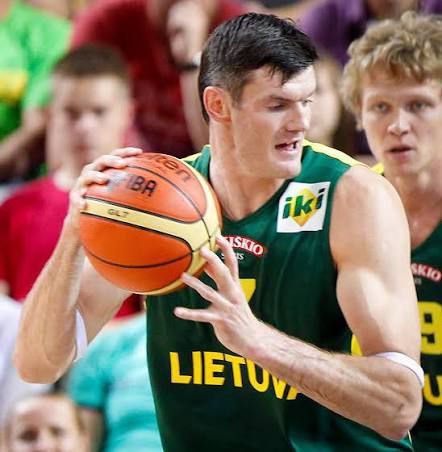
Your friendship with Šarūnas Jasikevičius goes back a long way, from the national team to your days together at Fenerbahçe. Now, he is the head coach of Fenerbahçe. How would you describe your bond with him? Even back when you were teammates, did you see the potential in him to become one of the greatest coaches in Europe? And how often do you catch up with him these days?
Šaras and I are still in contact to this day. When we played together, he was already like a general and a coach to us, so without a doubt, I saw the potential for him to become one of the best coaches in Europe. Šaras loves and worships basketball, and that is why he achieves such great results.
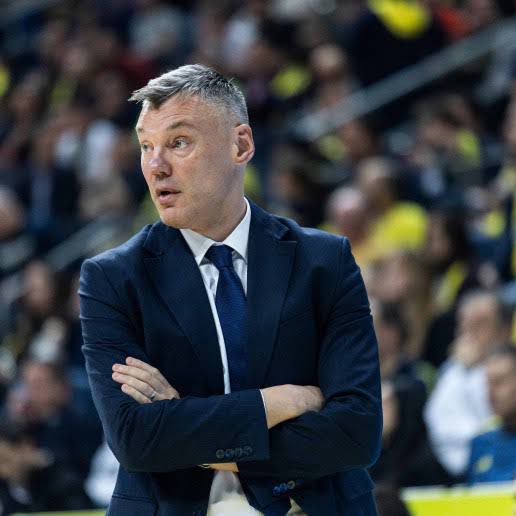
What does Fenerbahçe basketball truly mean to you? In your eyes, what are the unique qualities that set this club apart from any other team in the world?
Fenerbahçe will always stay in my heart. I think this club sets itself apart from other teams because it has a clear vision, big ambitions, and a great relationship with its fans.
Thank you very much for sharing these wonderful memories and being a guest of Salon Tribünü. It has been a true honor. As a final word, what message would you like to send to the Fenerbahçe fans who still carry great love and respect for you? We hope to see you in Istanbul again soon.
I would like to wish Fenerbahçe fans as many positive emotions and titles as possible. Remain just as united and loving of your club as you were in 2011. I would really love to see a EuroLeague final between Fenerbahçe and Žalgiris! 💙💛-💚💚
 Salon Tribünü